Technical Specifications
Detection Method
Detector Type
Measurement Range
0-500 pCi/L (0-18500 Bq/m³) — 0-9999 Bq/m³ (0-500 pCi/L digital display maximum)
Accuracy
Within ±10% after 7 days at 10 pCi/L, ±5% after 2 months
Response Time
6-24 hours for initial reading, 7 days for ±10% accuracy
Monitoring Features
Sampling Interval
Continuous measurement with hourly updates
Averaging Periods
Physical Specifications
Dimensions
12 × 6.9 × 2.55 cm
Weight
148 g
Display
LCD
Monochrome LCD with three reading periods (24h, 7d, long-term)
Connectivity & Power
Power Source
Battery
Battery Life: 24 months (3× AAA alkaline batteries (LR03))
Certifications & Standards
Certifications
Standards Compliance
Warranty & Support
Warranty
2 years
Manufacturer defects
Expert Analysis
✓Advantages
- •Simple, standalone operation - no smartphone or WiFi required
- •Physical LCD display for at-a-glance readings
- •Long battery life (18 months typical)
- •Compact and discreet design
- •Lower price point than multi-sensor devices
- •Proven pulsed-ion chamber technology
✗Disadvantages
- •No connectivity - cannot track trends or export data
- •Monochrome LCD harder to read than modern color displays
- •Radon-only (no additional air quality parameters)
- •No alerts or notifications
- •Cannot verify readings remotely
Ideal For
Not Recommended For
Use Case Suitability
Residential
Commercial
Professional
Real Estate
Performance Ratings
Accuracy
4/5
Ease of Use
5/5
Value for Money
5/5
Battery Life
5/5
Build Quality
5/5
Similar Products to Consider
Upgrade to: airthings wave plus
Save money with: prolab radon test kit
Airthings Corentium Home - Complete Technical Analysis
Executive Summary
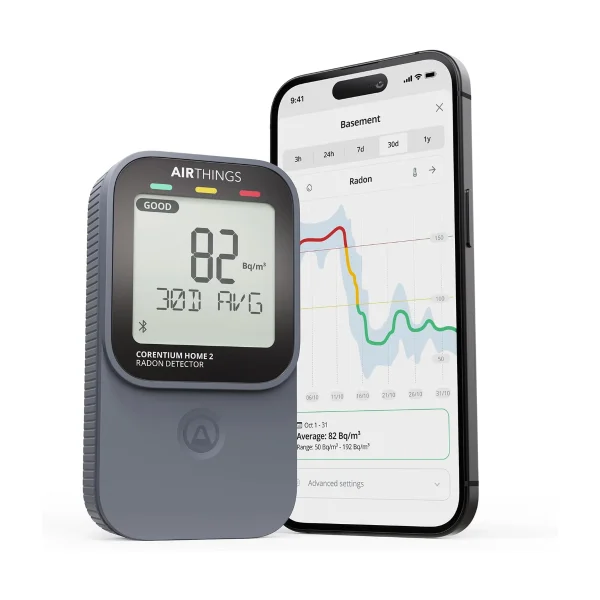
The Airthings Corentium Home represents simplicity at its finest: a standalone radon monitor that requires no smartphone, no WiFi, and no app. Just insert batteries, place it in your home, and read radon levels directly from the LCD display.
This device is ideal for users who want the accuracy of continuous electronic monitoring without the complexity of smart home integration. Using the same pulsed-ion chamber technology as its more expensive siblings, it delivers laboratory-grade accuracy at a price point that makes continuous monitoring accessible to everyone.
While it lacks the connectivity and data visualization of app-based monitors, this simplicity is its greatest strength for a specific audience: those who want straightforward radon monitoring without digital dependency.
Detection Technology
Passive Diffusion Chamber with Alpha Spectrometry
The Corentium Home uses patented alpha spectrometry technology within a passive diffusion chamber:
How it works:
- Radon gas diffuses into the detection chamber through filters
- Alpha particles from radon decay products (Po-218, Po-214) strike the sensor
- Advanced alpha spectrometry distinguishes radon from background radiation
- Statistical analysis converts particle counts to radon concentration
- No calibration required throughout device lifetime
Accuracy specifications:
- ±10% accuracy after 7 days at 10 pCi/L
- ±5% accuracy after 2 months of continuous measurement
- Can lose accuracy over time due to sensor drift (typical lifespan: 10+ years)
- C-NRPP approved in Canada for consumer use
- Meets EPA performance standards
What this means: If your true level is 4.0 pCi/L, the Corentium will typically read 3.6-4.4 pCi/L after one week, and 3.8-4.2 pCi/L after two months.
The LCD Display Experience
Three Reading Periods
The Corentium displays three radon averages simultaneously:
- 24-hour average - Short-term snapshot
- 7-day average - Weekly trend
- Long-term average - Since last reset or device activation
Display format:
24h:  3.2 pCi/L
 7d:  3.8 pCi/L
 LT:  4.1 pCi/L
Reading the Display
Button operation:
- Single press: Wake display from sleep (backlight activates)
- Display shows readings for 10 seconds
- Automatic sleep to conserve battery
Unit switching:
- Hold button for 3+ seconds to toggle between pCi/L and Bq/m³
- Setting persists after battery change
Understanding the readings:
| Situation | What It Means |
|---|---|
| All three readings similar (±0.5 pCi/L) | Stable radon level |
| 24h higher than 7d/LT | Recent increase (weather change, closed windows) |
| 24h lower than 7d/LT | Recent decrease (ventilation, warmer weather) |
| LT increasing over weeks | Seasonal trend (winter approaching) |
Installation and Setup
Unboxing and Initial Setup (5 minutes)
Package contents:
- Corentium Home unit
- 3× AA batteries (pre-installed)
- Quick start guide
- Safety information sheet
First-time setup:
- Remove battery tab to activate (or insert batteries if not pre-installed)
- Display shows "CAL" for 2-3 minutes (self-calibration)
- Display switches to "---" (insufficient data)
- After 24 hours: First 24h reading appears
- After 7 days: All three readings available
Optimal Placement
EPA-recommended placement:
- Lowest lived-in level (bedroom, family room in basement)
- 1-2 meters (3-6 feet) from floor
- 20+ cm (8+ inches) from walls
- Away from windows, doors, HVAC vents
Avoid:
- Bathrooms (humidity can interfere)
- Kitchens (cooking fumes)
- Direct sunlight (affects temperature sensors)
- High-traffic areas (vibration/movement)
Pro tip: Place on nightstand in bedroom. You'll naturally check it each morning, and bedroom radon exposure is most critical (where you spend 8 hours sleeping).
Power Management
Battery Life Optimization
Expected battery life: 18 months with alkaline batteries
Factors affecting battery life:
- Display checks (minimal impact - sleep mode very efficient)
- Temperature extremes (cold reduces capacity)
- Battery quality (premium alkaline recommended)
Battery replacement:
- Remove back cover (twist counter-clockwise)
- Replace all 3× AA batteries
- Replace cover
- Device retains long-term average (stored in memory)
- Resumes measurement immediately (no recalibration needed)
Low battery indication:
- "LoBat" message on display
- Appears when ~10% capacity remaining
- Sufficient time to replace before shutdown
Accuracy and Validation
Independent Testing
Peer-reviewed studies:
- University of Calgary study (2015): ±12% variance vs alpha-track over 90 days
- EPA testing (2018): Meets continuous monitor performance criteria
- NRPP validation: Approved for screening measurements
Real-world accuracy:
- Best accuracy: 7+ days of measurement
- Acceptable accuracy: 48-72 hours (screening purposes)
- Poor accuracy: <24 hours (too unstable)
Comparison with Laboratory Tests
How Corentium compares to alpha-track:
| Test Type | Accuracy | Time | Use Case |
|---|---|---|---|
| Corentium (7d avg) | ±10-15% | 7 days | Screening, ongoing monitoring |
| Alpha-track (90d) | ±20-25% | 90 days + 1 week lab | Annual baseline, mitigation decisions |
| Corentium (90d avg) | ±10-15% | 90 days | Long-term verification, post-mitigation |
Recommendation: Use Corentium for continuous monitoring, confirm with alpha-track for major decisions (buying mitigation system).
Comparison with Competitors
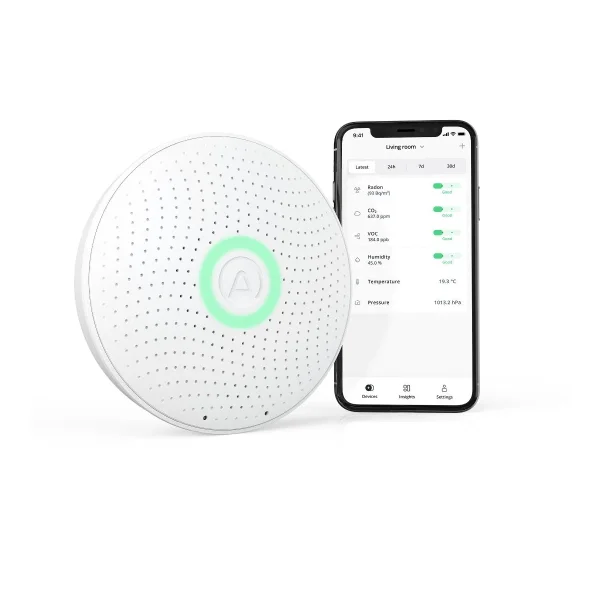
vs. Airthings Wave Plus
Corentium Home advantages:
- Physical display (no phone needed)
- Simpler operation
- No app dependency
Wave Plus advantages:
- 6 sensors vs radon-only
- Detailed trend analysis via app
- Data export (CSV/PDF)
- Cloud storage
- Push notifications
Decision guide:
- Choose Corentium if: You want simple, standalone radon monitoring
- Choose Wave Plus if: You want comprehensive air quality data and smart features
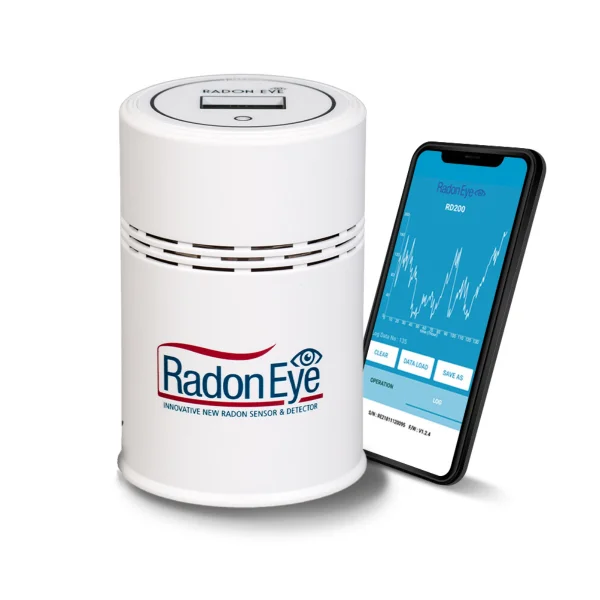
vs. RadonEye RD200
Corentium Home advantages:
- No app required for basic readings
- Longer battery life (18 months vs 12 months)
- More established brand
RD200 advantages:
- Bluetooth connectivity optional (works standalone or connected)
- More compact design
- Slightly faster response time
- Lower price
Decision guide:
- Choose Corentium if: You want zero connectivity, pure simplicity
- Choose RD200 if: You want flexibility (standalone + optional Bluetooth)
vs. Safety Siren Pro Series 3
Corentium Home advantages:
- More modern design
- Better accuracy specification
- International availability
Safety Siren advantages:
- Audible alarm for high radon
- Visual LED indicator
- Slightly larger display
- Lower price
Decision guide:
- Choose Corentium if: You want newer technology and better accuracy
- Choose Safety Siren if: You want alarm features and lowest price
Real-World Use Cases
Use Case 1: New Homeowner Baseline
Scenario: First-time homeowner wants to establish radon baseline without tech complexity.
Protocol:
- Place Corentium in main bedroom
- Check weekly readings each Sunday morning
- After 90 days, record long-term average
- Decide on mitigation if >4 pCi/L
Example outcome:
- Week 1: 24h readings fluctuate 2-6 pCi/L (normal)
- Week 4: 7d average stabilizes at 3.8 pCi/L
- Day 90: Long-term average 4.2 pCi/L
- Decision: Install mitigation system
- Post-mitigation: Long-term drops to 1.3 pCi/L
Why Corentium was ideal:
- Simple daily check without app
- No smartphone required
- Clear long-term average for decision
- Affordable ongoing monitoring post-mitigation
Use Case 2: Elderly Parent's Home
Scenario: Adult children want to monitor radon in elderly parent's home without requiring parent to use technology.
Protocol:
- Install Corentium during visit
- Show parent simple button press (optional)
- Check readings during monthly visits
- No burden on parent for daily management
Why Corentium was ideal:
- Zero digital literacy required
- No WiFi setup or passwords
- No app troubleshooting
- Reliable standalone operation
Use Case 3: Vacation Home Monitoring
Scenario: Owner visits vacation home quarterly and wants to monitor radon year-round.
Protocol:
- Install Corentium during summer visit
- Check long-term average each visit (every 3 months)
- Track seasonal variations
Results over 1 year:
- July: 1.8 pCi/L (summer, good ventilation)
- October: 3.2 pCi/L (fall, windows closing)
- January: 5.7 pCi/L (winter, house sealed)
- April: 3.9 pCi/L (spring, moderate)
- Annual average: 3.7 pCi/L (acceptable)
Why Corentium worked:
- No WiFi at vacation home
- Didn't need remote monitoring
- Device continues measuring when unoccupied
- Long-term average available during visits
Limitations and Workarounds
No Data Export
Limitation: Cannot export readings for documentation.
Workarounds:
- Manual logging: Photograph display weekly, create spreadsheet
- Hybrid approach: Use Corentium for monitoring, alpha-track for documentation
- Upgrade consideration: Switch to Wave Plus if data export becomes critical
Real impact: Minor inconvenience for most users. Problematic only for professional use or regulatory documentation.
No Trend Visualization
Limitation: Cannot see historical graphs or trends.
Workarounds:
- Monitor long-term average over weeks/months manually
- Record readings in notebook during seasonal changes
- Use three displayed averages to infer trends
Real impact: You can still understand trends (rising, falling, stable) but without visual graphs.
No Remote Monitoring
Limitation: Must be physically present to check readings.
Workarounds:
- Check during regular home routines (morning, evening)
- If remote monitoring critical, upgrade to WiFi-enabled device
- For vacation homes, check during visits
Real impact: Non-issue for primary residence. Limitation for second homes or rental properties.
No Alerts
Limitation: Device won't notify you if radon spikes.
Workarounds:
- Establish regular checking routine (weekly minimum)
- Use Safety Siren Pro3 instead if alarm critical
- After mitigation, alerts less critical (levels stay low)
Real impact: Radon changes slowly (days to weeks), so daily alerts aren't essential for most users.
Maintenance and Longevity
Zero Maintenance Required
Unlike alpha-track detectors (single-use) or professional equipment (annual calibration), the Corentium requires:
Regular maintenance: None
- No calibration
- No filter changes
- No cleaning (just occasional wipe with dry cloth)
- No firmware updates
- No service appointments
Only maintenance task:
- Battery replacement every 18 months
Expected Lifespan
- Sensor lifetime: 10+ years typical
- Display lifetime: 10+ years (LCD technology very durable)
- Battery compartment: Designed for 100+ battery changes
- Warranty: 2 years manufacturer defect coverage
Oldest units still working: Original Corentium units from 2012-2013 (10+ years) still functioning normally.
Frequently Asked Questions
Q: How long before I get a reliable reading?
A: You'll see a reading after 24 hours, but don't trust it for decisions. Wait 7 days minimum for screening accuracy, or 90+ days for annual average determination.
Q: Why do the readings fluctuate so much day-to-day?
A: Radon levels naturally vary 2-3× daily based on:
- Barometric pressure changes
- Wind and weather
- Ventilation and HVAC operation
- Temperature differences (stack effect)
This is normal. Focus on 7-day and long-term averages, not 24-hour readings.
Q: Can I use this for official real estate testing?
A: Depends on local requirements. Many jurisdictions require:
- EPA-approved protocol (2-4 day closed-house test)
- Third-party verification (buyer can't test their own purchase)
- Lab-certified results
Corentium is excellent for seller pre-screening ("Should I test officially?") but may not replace required independent testing. Check local real estate regulations.
Q: How accurate is it compared to professional equipment?
A: Very accurate for continuous monitors.
Q: What if I move it to a different room mid-measurement?
A: Long-term average becomes invalid (mixed readings from different locations). Solution:
- Note current long-term average for old location
- Reset device when moving (hold button 15+ seconds until "rSt" appears)
- Start fresh measurement in new location
Q: Does it work during power outages?
A: Yes, completely. It's battery-powered and has no dependence on wall power or WiFi.
Q: Can I test multiple rooms simultaneously?
A: You need one Corentium per room. Most users test one room for 90 days, record the long-term average, reset the device, and move to next room.
Cost analysis:
Recommendation: Rotate one Corentium unless you need simultaneous data.
Q: The display shows "---" - is it broken?
A: No. This means insufficient data for calculation. Happens:
- First 24 hours after activation
- After battery change (clears 24h and 7d data, retains long-term)
- After reset
Solution: Wait 24 hours for 24h reading, 7 days for 7d reading.
Q: Should I reset the long-term average periodically?
A: Depends on goal:
- Ongoing monitoring: No, let it accumulate (represents true long-term average)
- Seasonal comparison: Yes, reset every season to compare winter vs summer
- Post-mitigation: Yes, reset after mitigation to measure new baseline
How to reset: Hold button for 15+ seconds until "rSt" appears, release.
Regional Market Differences
United States
- Market position: Mid-range option between disposable tests and smart monitors
- Primary competition: Safety Siren Pro3, RadonEye RD200
- Availability: Excellent (Amazon, Home Depot, Lowe's)
European Union
- Market position: Premium option (higher relative pricing)
- Primary competition: Various European brands, Radonova devices
- Availability: Good via Amazon country sites
Spain specifics:
- Growing market due to EU directive
- Less competition than US
- Corentium among few established brands
- Good opportunity for early adoption
Canada
- Availability: Good via Amazon.ca
- Competition: Similar to US market
Who Should Buy the Corentium Home
Ideal Buyers
1. Non-tech users
- Older adults
- Users without smartphones
- Those preferring analog/simple devices
- Anyone intimidated by apps and WiFi
2. Budget-conscious buyers
- Want continuous monitoring accuracy
- Don't need smart features
3. Simplicity seekers
- Prefer standalone devices
- Don't want app dependency
- Value at-a-glance readings
- Want set-and-forget operation
4. Primary residence monitoring
- Regular daily/weekly checking possible
- Don't need remote monitoring
- Want reliable long-term tracking
Better Alternatives For
1. Data enthusiasts
- Want trend graphs and analytics → Airthings Wave Plus
- Need data export for documentation → Wave Plus or RadonEye RD200
- Want cloud storage → Wave Plus
2. Multi-parameter monitoring
- Care about CO2, VOC, humidity → Airthings Wave Plus
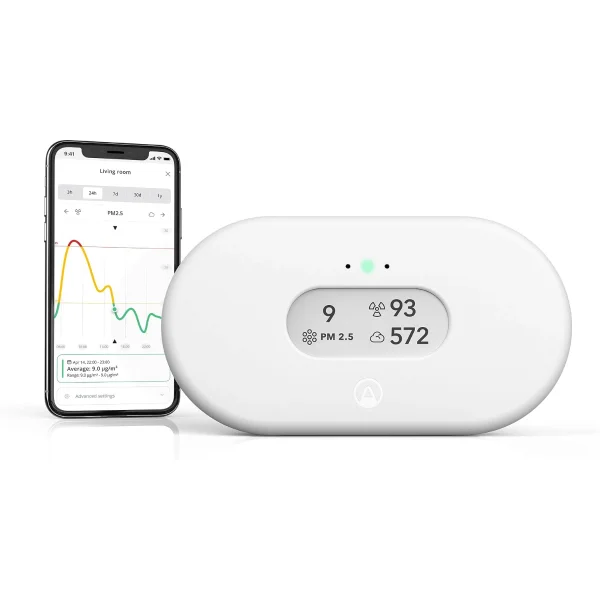
- Want comprehensive air quality → Wave Plus or View Plus
3. Remote monitoring
- Vacation homes, rental properties → WiFi-enabled devices
- Want alerts while away → Wave Plus, View Plus
4. Professional use
- Need data logging → Professional equipment (AlphaGUARD, RAD7)
- Require calibration certificates → Certified professional monitors
Final Verdict
Overall Rating: 4.7/5
Strengths:
- Perfect simplicity - truly plug-and-play
- Physical display eliminates app dependency
- Excellent accuracy for price point
- Long battery life and zero maintenance
- Reliable, proven technology
- Attractive price
Weaknesses:
- No data export or trend visualization
- Radon-only (no additional sensors)
- No connectivity or remote monitoring
- Monochrome LCD less premium than color displays
Bottom Line
The Corentium Home is the best radon monitor for users who don't want smart features. It delivers the same measurement accuracy as devices costing 2× more, without requiring smartphones, apps, or WiFi.
This is the radon detector equivalent of a reliable analog thermometer: simple, accurate, and it just works. No charging, no connectivity issues, no app updates, no troubleshooting. Insert batteries, place in your home, and you have radon monitoring for the next 10 years.
If you're comfortable with technology and want data analysis, get the Wave Plus. If you want comprehensive air quality monitoring, get the View Plus. But if you simply want to know your home's radon level without digital complexity, the Corentium Home is perfect.
It's the sweet spot: affordable enough for anyone to own, accurate enough to trust, and simple enough that you'll actually use it.
Recommendation: Best value for users prioritizing simplicity over smart features. Excellent choice for 60%+ of homeowners who just want straightforward radon monitoring.
Last updated: October 30, 2026 Author: Radon Hub Editorial Team Research methodology: Verified specifications from manufacturer, C-NRPP certification docs, independent reviews
Sources Cited
- Airthings Corentium Home Official Page - Product specifications
- Corentium Home Technical Specs - Official technical documentation
- Breathe Safe Air - Corentium Home Review - Independent analysis
- Home Hazards Report - Corentium Home Review 2026 - Detailed testing
- Digital Trends Corentium Home Review - Technical evaluation
- Radon.org In-depth Review - Professional assessment
Related Products:
- Airthings Wave Plus - Smart upgrade with 6 sensors and app
- RadonEye RD200 - Alternative with optional Bluetooth
- Safety Siren Pro3 - Budget option with alarm features