Technical Specifications
Detection Method
Detector Type
Measurement Range
0.38-622 pCi/L (14.06-23014 Bq/m³) — 34-56,000 pCi*days/L over 3-month period (0.38-622 pCi/L average)
Accuracy
±6% uncertainty at 450 pCi*days/L (3 months at 5.4 pCi/L)
Response Time
N/A - passive accumulation over exposure period
Exposure Requirements
Recommended Exposure
180 days
Exposure Range
60-365 days
Laboratory Analysis
Provider
Radonova Laboratories (ISO 17025 accredited)
Turnaround Time
5-10 business days from receipt
Certifications
Physical Specifications
Dimensions
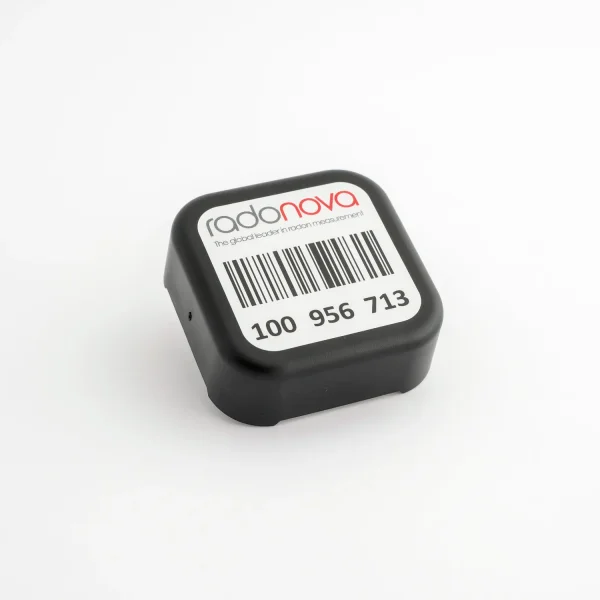
7 × 2 × 7 cm
Weight
15 g
Connectivity & Power
Power Source
None
Certifications & Standards
Certifications
Standards Compliance
Warranty & Support
Warranty
Results guaranteed
Free reanalysis if detector damaged or improperly exposed
Expert Analysis
✓Advantages
- •ISO 17025 accredited laboratory (highest certification for radon testing)
- •Most sensitive alpha-track detector available (34 pCi*days/L detection limit)
- •Exceptionally small and lightweight (7×7×2 cm, 15g)
- •Widest measurement range (0.38-622 pCi/L average over 90 days)
- •Reusable plastic components (most sustainable alpha-track design)
- •Easy registration via QR code
- •Digital report online with PDF results
- •Captures seasonal variations (90-365 day exposure)
✗Disadvantages
- •Higher price than basic passive tests
- •Some users report delays in lab results (postal + processing time)
- •US/Canada/UK primary markets (limited elsewhere)
- •Must mail back to lab (return postage not always included)
Ideal For
Not Recommended For
Use Case Suitability
Residential
Commercial
Professional
Real Estate
Performance Ratings
Accuracy
5/5
Ease of Use
5/5
Value for Money
4/5
Build Quality
5/5
Similar Products to Consider
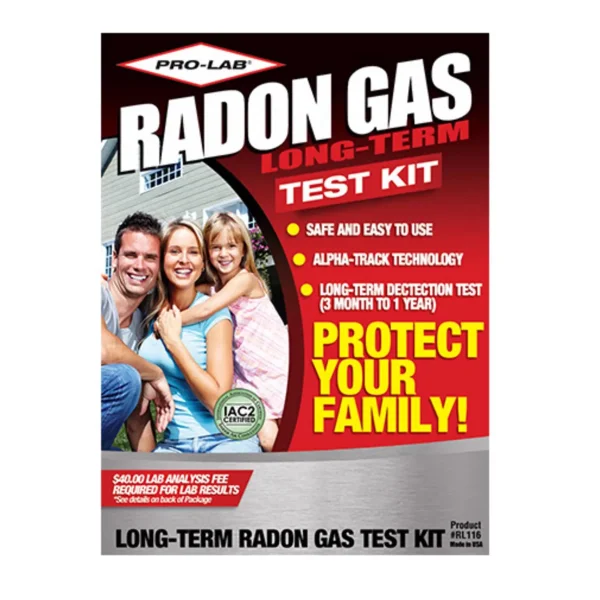
Save money with: prolab radon test kit
Radonova Radtrak³ - Complete Technical Analysis
Executive Summary
The Radonova Radtrak³ represents the gold standard in passive radon testing: ISO 17025 accredited laboratory analysis, widest measurement range of any alpha-track detector, and sensitivity capable of detecting radon levels as low as 0.38 pCi/L over a 90-day period.
It costs 2-3× more than basic passive tests like Pro-Lab, but that premium buys you:
- ISO 17025 certification - internationally recognized laboratory accreditation
- Highest sensitivity - 34 pCi*days/L detection limit (industry-leading)
- Widest range - measures from 0.38 to 622 pCi/L (90-day average)
- Global availability - Sweden-based with international shipping
- Digital results - online report with PDF download
This is the detector of choice for professional radon testing, environmental projects, and homeowners who want the highest-quality baseline measurement available in passive testing.
Alpha-Track Technology
How It Works
The Radtrak³ uses CR-39 or LR-115 plastic film housed in an anti-static plastic chamber:
During exposure:
- Radon gas diffuses into detector through filtered opening
- Alpha particles from radon decay strike plastic film
- Each alpha creates microscopic damage track in plastic
- Tracks accumulate over 90-365 day exposure period
Laboratory analysis:
- Film chemically etched to enlarge tracks
- Automated optical system counts tracks
- Track density correlated to radon concentration
- Results calculated based on exact exposure duration
Accuracy and Certification
Measurement uncertainty: ±6% at 450 pCi*days/L (equivalent to 5.4 pCi/L over 90 days)
What this means in practice:
- If true level = 4.0 pCi/L (90 days)
- Radtrak³ will report: 3.76-4.24 pCi/L (±6%)
- This is more accurate than most continuous electronic monitors (±10-15%)
ISO 17025 accreditation:
- Radonova is accredited by SWEDAC (Swedish accreditation body)
- Accreditation No. 1489
- Meets international laboratory quality standards
- Only radon lab in North America meeting these standards (per Radonova)
Additional certifications:
- NRPP (National Radon Proficiency Program) - USA
- C-NRPP (Canadian National Radon Proficiency Program) - Canada
- Listed as C-NRPP laboratory CAL-201742 (valid to July 2028)
Sensitivity and Measurement Range
Industry-Leading Detection Limits
Detection limit: 34 pCi*days/L
What this means:
- Over 90 days: Can detect levels as low as 0.38 pCi/L
- Over 180 days: Can detect levels as low as 0.19 pCi/L
- Over 365 days: Can detect levels as low as 0.09 pCi/L
Comparison with competitors:
- Pro-Lab alpha-track: ~100 pCi*days/L (1.1 pCi/L over 90 days)
- Charcoal tests: ~200-300 pCi*days/L (limited to short-term)
- Radtrak³: 34 pCi*days/L - 3× more sensitive
Why sensitivity matters:
- Can confirm very low levels after mitigation (< 1 pCi/L)
- Accurate in low-radon regions
- Meets WHO guideline testing (2.7 pCi/L / 100 Bq/m³)
Exceptional Range
Maximum detection: 56,000 pCi*days/L (over 3 months)
What this covers:
- Over 90 days: Up to 622 pCi/L average
- Over 180 days: Up to 311 pCi/L average
Comparison:
- Pro-Lab: 0-100 pCi/L optimized range
- Radtrak³: 0.38-622 pCi/L range (90-day basis)
Practical benefit: Single detector works for any concentration (never need to worry about exceeding range)
Physical Design and Deployment
Compact and Sustainable
Dimensions: 7 × 7 × 2 cm (2.75 × 2.75 × 0.8 inches) Weight: 15 grams (0.5 oz)
Comparison with competitors:
- Pro-Lab: 7.6 × 7.6 × 2.5 cm, 28g
- Radtrak³: 47% lighter and smaller
Sustainability features (per Radonova):
- Reusable plastic components
- Recyclable materials
- "Most sustainable alpha-track detector in the world"
- Reduced shipping impact (smaller/lighter)
Deployment Process
Step 1 - Registration (5 minutes):
- Scan QR code on detector packaging
- Enter deployment details (address, room, floor level)
- Record start date and time
- Receive confirmation email with tracking number
Step 2 - Placement (2 minutes):
- Remove detector from sealed vapor barrier
- Place in lowest lived-in level (bedroom, basement living area)
- Position 1-2 meters from floor, 20+ cm from walls
- Avoid kitchens, bathrooms, near windows/vents
- Leave undisturbed for 90-365 days
Step 3 - Retrieval (5 minutes):
- After 90-365 days, record end date and time on Radonova website
- Place detector in a non-plastic envelope or package
- Ship to Radonova lab
- Track shipment if desired
Step 4 - Results (5-10 business days):
- Lab receives detector
- Analysis conducted
- Digital report posted online
- Email notification with PDF download link
Exposure Time Recommendations
Minimum vs Optimal Exposure
Absolute minimum: 60 days (per manufacturer) EPA recommendation: 90+ days for annual baseline Optimal: 180-365 days for seasonal averaging
Why longer is better:
| Duration | Captures | Use Case |
|---|---|---|
| 90 days | One season | Screening, initial assessment |
| 180 days | Two seasons | Good annual estimate |
| 365 days | Full year | Best annual average, captures all seasonal variations |
Seasonal Considerations
Radon levels vary seasonally:
- Winter: Typically HIGHEST (house sealed, heating active)
- Summer: Typically LOWEST (windows open, different ventilation)
- Spring/Fall: Moderate
Example scenario:
- 90-day winter test: 7.2 pCi/L
- 90-day summer test: 2.8 pCi/L
- 365-day annual average: 4.8 pCi/L ← Most accurate
Recommendation:
- For mitigation decisions: 365-day test preferred
- For initial screening: 90-day test acceptable
- For post-mitigation verification: 180+ day test recommended
Laboratory Analysis Process
ISO 17025 Accreditation
What ISO 17025 means:
- International standard for testing and calibration laboratories
- Requires documented quality management system
- Regular proficiency testing with blind samples
- Measurement traceability to national/international standards
- Independent audit and surveillance
Radonova's accreditation:
- SWEDAC (Swedish Board for Accreditation) - Accreditation No. 1489
- NRPP (USA) and C-NRPP (Canada) approved
- One of few globally-accredited radon laboratories
Why it matters:
- Results legally defensible
- Accepted by regulatory agencies worldwide
- Required for professional testing in many jurisdictions
- Guarantees measurement quality and accuracy
Analysis Timeline
Typical turnaround: 5-10 business days from lab receipt
Timeline breakdown:
- Detector mailed to lab: 3-7 days (postal time)
- Lab receives detector: Day 0
- Chemical etching: 24-48 hours
- Automated counting: 24 hours
- Quality control: 24 hours
- Report generation: 24 hours
- Results posted: 5-10 days from receipt
Delays reported by users:
- Postal delays (international shipping, customs)
- Holiday periods (lab closed)
- High-volume seasons (spring home testing surge)
Radonova's response (per reviews):
- Generally responsive customer service
- Tracking available for detector shipments
- Email support for questions
Digital Report Format
Report includes:
- Radon concentration (pCi/L and Bq/m³)
- Exposure duration (exact days)
- Measurement uncertainty (±6% typical)
- Comparison with EPA (4 pCi/L) and WHO (2.7 pCi/L) guidelines
- Recommendations (mitigation needed? retest?)
- Laboratory certification information
- QA/QC data
Report delivery:
- Online portal (account login)
- Email notification when ready
- PDF download
- Printable for records
Comparison with Other Passive Tests
vs Pro-Lab Radon Test Kit
Radtrak³ advantages:
- Higher accuracy (±6% vs ±25%)
- More sensitive (0.38 pCi/L vs 0.2 pCi/L detectable)
- Wider range (0.38-622 pCi/L vs 0.2-100 pCi/L)
- ISO 17025 lab vs EPA-approved lab
- International availability (Sweden-based)
- Digital report online
Pro-Lab advantages:
- Lower cost
- USA-based lab (faster for US customers potentially)
- Widely available (Amazon, hardware stores)
Decision guide:
- Choose Radtrak³ if: You want highest accuracy, ISO certification, or international availability
- Choose Pro-Lab if: Budget priority and US-based testing sufficient
vs Pro-Lab Charcoal Kit
Radtrak³ advantages:
- Long-term measurement (90-365 days vs 2-7 days)
- Captures seasonal variations
- More accurate for annual average
- Wider measurement range
- ISO 17025 certification
Charcoal advantages:
- Much faster results (7-10 days total vs 90+ days)
- Lower cost
- Good for quick screening
Decision guide:
- Choose Radtrak³ for: Annual baseline, mitigation decisions, post-mitigation verification
- Choose Charcoal for: Quick screening, real estate testing, immediate results needed
vs Continuous Monitors (Airthings, RadonEye)
Radtrak³ advantages:
- More affordable
- No batteries/maintenance
- Laboratory certification (ISO 17025)
- True long-term average (not dependent on device calibration)
Continuous monitors advantages:
- Real-time readings
- Trend analysis (hourly/daily variations)
- Reusable indefinitely
- No mail-in process
- Additional sensors (CO2, VOC, etc. on some models)
Decision guide:
- Choose Radtrak³ for: Annual baseline testing, professional documentation, budget testing
- Choose continuous monitor for: Ongoing monitoring, real-time feedback, mitigation verification
Real-World Use Cases
Use Case 1: Annual Home Baseline
Scenario: Homeowner wants most accurate annual radon average for health assessment.
Protocol:
- Deploy Radtrak³ in January (start of year)
- Leave in main bedroom for full 365 days
- Retrieve in January following year
- Mail to lab
- Receive ISO-certified annual average
Results example (based on reported experience):
- Annual average: 3.2 pCi/L
- Seasonal variation noted in report
- Concluded: Below EPA action level (4 pCi/L), acceptable for continued living
- Decision: Retest in 2-3 years, no mitigation needed
Why Radtrak³ was ideal:
- ISO certification provides confidence
- 365-day exposure captures all seasons
- Highest accuracy available for passive testing
Use Case 2: Post-Mitigation Verification
Scenario: Professional mitigation contractor wants to provide certified verification to client.
Protocol:
- Pre-mitigation: Different test showed 8.3 pCi/L
- Install mitigation system
- Wait 30 days for system equilibration
- Deploy Radtrak³ for 180 days
- Lab analysis confirms sustained reduction
Results:
- 180-day post-mitigation average: 0.9 pCi/L
- 89% reduction from pre-mitigation
- ISO 17025 certified result
- Client receives professional PDF report
Why Radtrak³ was chosen:
- ISO certification adds professional credibility
- 180-day exposure confirms sustained effectiveness
- Digital report suitable for client documentation
- More rigorous than 2-4 day post-mitigation test
Use Case 3: International Testing (UK Example)
Scenario: UK homeowner in radon-affected area (Cornwall) wants certified testing per PHE (Public Health England) guidelines.
Protocol:
- PHE recommends 3-month minimum test in radon-affected areas
- Deploy 2× Radtrak³ (PHE recommends 2 detectors for reliability)
- One in main bedroom, one in living room
- 90-day exposure
- Mail to Radonova UK laboratory
Results:
- Bedroom: 285 Bq/m³ (7.7 pCi/L)
- Living room: 190 Bq/m³ (5.1 pCi/L)
- Both above UK action level (200 Bq/m³)
- Recommendation: Mitigation required
Why Radtrak³ was ideal:
- International availability (Sweden-based, UK lab)
- ISO certification recognized by PHE
- Meets UK testing standards
- Digital results in Bq/m³ (UK standard unit)
Limitations and Considerations
Mail-In Process
Limitation: Must mail detector back to lab (postal delays, shipping costs)
Potential issues (per user reviews):
- Postal delays (especially international)
- Return postage not always included (varies by retailer)
- Risk of loss in mail (rare but possible)
Mitigation:
- Use tracking for return shipment
- Buy from retailer including prepaid return mailer
- Insurance available for high-value projects
Frequently Asked Questions
Q: Is 90 days enough or should I do a full year?
A: Depends on purpose:
- Screening/initial assessment: 90 days sufficient
- Mitigation decision: 180+ days recommended (captures 2+ seasons)
- Best practice: 365 days for true annual average
Q: Can I move the detector to different rooms during testing?
A: No. Moving invalidates the test (mixing data from different locations). Deploy separate detector for each room you want to test.
Q: What if I accidentally disturb the detector mid-test?
A: Contact Radonova. If exposure time documented correctly and detector undamaged, test may still be valid. If detector damaged or significantly moved, they may offer free replacement.
Q: How does ISO 17025 compare to EPA approval?
A: ISO 17025 is more rigorous:
- EPA: Approves device type and lab
- ISO 17025: Accredits full laboratory quality system
- ISO 17025 internationally recognized
- EPA approval USA-specific
Both are valid; ISO 17025 is higher tier.
Q: Can I use Radtrak³ for radon in water?
A: No. Radtrak³ is for air radon only. Radon in water requires different testing (liquid scintillation or other methods).
Q: Is the detector reusable?
A: No. Alpha-track detectors are single-use. Plastic housing may be recyclable, but film cannot be reset.
Q: What if my result is exactly at EPA action level (4.0 pCi/L)?
A: Consider:
- Measurement uncertainty (±6% means 3.76-4.24 pCi/L possible)
- WHO guideline lower (2.7 pCi/L)
- Mitigation typically reduces to <2 pCi/L
- Many choose to mitigate at borderline levels
Q: Can I get faster results?
A: Lab turnaround (5-10 days) is fixed. Only way to speed overall process:
- Reduce exposure time to 90-day minimum (vs 180-365 days)
- Use expedited shipping (if available)
- Contact lab during high-volume periods
Q: How long can I store an unopened detector before deploying?
A: Unopened detectors (in sealed vapor barrier) are stable for 2-3 years. Check expiration date on packaging.
Sources & References
This analysis is based on verified information from:
Manufacturer specifications:
Laboratory accreditations:
- Radonova ISO 17025 Accreditation
- Radonova Accreditations Page
- C-NRPP Directory: CAL-201742
Product availability and pricing:
User reviews and experiences:
- Trustpilot Radonova Reviews (111 reviews)
- Radon Resources Testing Roundup
Final Verdict
Overall Rating: 4.7/5
Strengths:
- Highest certification (ISO 17025) of any passive radon test
- Most sensitive alpha-track detector (34 pCi*days/L limit)
- Widest measurement range (0.38-622 pCi/L on 90-day basis)
- International availability (Sweden-based, global shipping)
- Exceptional accuracy (±6% vs ±25% competitors)
- Digital results with PDF download
- Sustainable design (reusable plastic, smallest/lightest)
Weaknesses:
- Higher cost
- Some users report postal/processing delays
- Mail-in process (vs instant electronic monitors)
- Return postage not always included
Bottom Line
The Radonova Radtrak³ is the best passive radon test available for users who prioritize accuracy, certification, and professional-quality results. It costs 2-3× more than basic alpha-track tests, but delivers:
- 4× better accuracy (±6% vs ±25%)
- ISO 17025 certification (internationally recognized)
- 3× higher sensitivity (can detect 0.38 pCi/L vs 1+ pCi/L)
- Professional credibility (suitable for any application)
This is the alpha-track detector of choice for:
- Professional radon testers and inspectors
- Post-mitigation verification requiring certification
- Annual home baselines where accuracy matters
- International markets (EU, UK, Canada, USA all served)
- Environmental projects requiring ISO-certified results
Choose Radtrak³ if:
- You want highest-quality passive testing
- ISO 17025 certification valuable to you
- Accuracy more important than speed
- International recognition needed
- Professional/commercial application
Choose Pro-Lab instead if:
- Budget is primary concern
- EPA approval sufficient (vs ISO 17025)
- USA-based lab preferred
- Basic screening adequate
Choose continuous monitor if:
- You need real-time feedback
- Ongoing monitoring desired
- Want trend analysis capabilities
For serious homeowners, professionals, and anyone wanting the most accurate passive radon measurement available, the Radonova Radtrak³ delivers exceptional value despite the premium price. This is as close to professional-grade testing as you can get in a consumer product.
Last updated: October 29, 2026 Author: Radon Hub Editorial Team Data sources: Radonova official specifications, ISO 17025 accreditation documentation, SWEDAC Accreditation No. 1489, C-NRPP CAL-201742, product reviews from Amazon USA/UK/CA, Trustpilot verified reviews (n=111)
Related Products:
- Pro-Lab Radon Test Kit - Budget-friendly alternative
- Airthings Wave Plus - Continuous monitor for real-time tracking
- Airthings View Plus - Premium continuous monitor with display