Technical Specifications
Detection Method
Detector Type
Measurement Range
0.4-200 pCi/L (14.8-7400 Bq/m³) — Optimized for residential range 0-20 pCi/L
Accuracy
±10-15% compared to professional electronic monitors (per studies)
Response Time
N/A - passive accumulation over 48-96 hours
Exposure Requirements
Recommended Exposure
4 days
Exposure Range
2-7 days
Laboratory Analysis
Provider
Pro-Lab NRPP-certified laboratory
Turnaround Time
Standard: 7 days | Expedited: 2 days (extra fee)
Certifications
Physical Specifications
Dimensions
7.6 × 6.4 × 7.6 cm
Weight
57 g
Connectivity & Power
Power Source
None
Certifications & Standards
Certifications
Standards Compliance
Warranty & Support
Warranty
Results guaranteed
Free reanalysis if detector improperly exposed or damaged
Expert Analysis
✓Advantages
- •Fastest passive test available (48-96 hours vs 90+ days alpha-track)
- •Most affordable option
- •EPA-recommended for real estate transactions
- •NRPP-certified lab analysis included
- •NSF/ANSI Standard 269 certified for measurement precision
- •Patented silica gel desiccant design improves accuracy
- •Liquid scintillation analysis (most advanced charcoal method)
- •Widely available (Amazon, Home Depot, Lowe's)
- •Dual kit meets EPA/inspector recommendations for verification
✗Disadvantages
- •Less accurate than long-term tests (±10-15% vs ±6% alpha-track)
- •Snapshot only (doesn't capture seasonal variations)
- •Requires strict closed-house conditions (12 hours before + during test)
- •Time-sensitive after exposure (must mail within days)
- •Weather-dependent accuracy (humidity, temperature affect results)
- •Some users report late mail arrival invalidating test
- •Return postage not included
- •Single-use only (cannot retest with same canister)
Ideal For
Not Recommended For
Use Case Suitability
Residential
Commercial
Professional
Real Estate
Performance Ratings
Accuracy
3/5
Ease of Use
5/5
Value for Money
5/5
Build Quality
4/5
Similar Products to Consider
Upgrade to: prolab radon test kit
Save money with: radon home test kit
Pro-Lab Charcoal Radon Test Kit - Complete Technical Analysis
Executive Summary
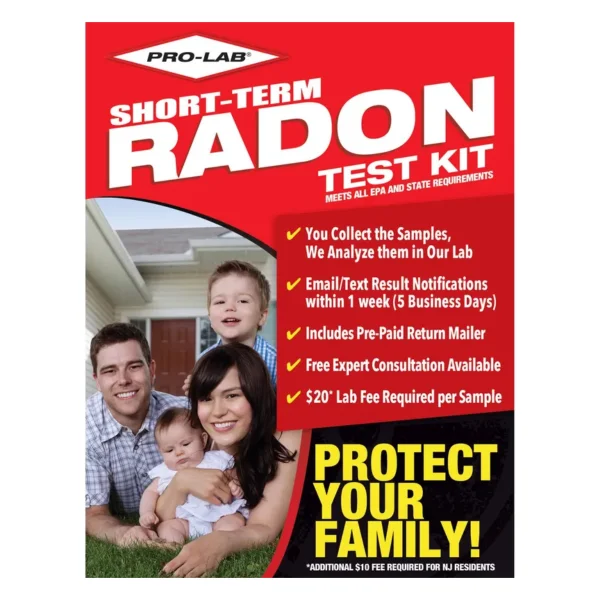
The Pro-Lab Charcoal Radon Test Kit is the fastest and most affordable EPA-approved radon test available. It provides NRPP-certified results in as little as 48-96 hours exposure + 7 days lab turnaround.
This charcoal canister test is the gold standard for real estate transactions, home inspections, and quick screening measurements. It's what professional inspectors use, what the EPA recommends for short-term testing, and what buyers/sellers rely on for property transactions.
Key advantages:
- Fastest passive test: 48-96 hours vs 90+ days (alpha-track)
- Real estate standard: Meets EPA protocols for property transactions
- NRPP certified: Laboratory analysis meets professional standards
Important limitation: This is a snapshot test - it measures radon during a specific 2-7 day period, not annual average. For annual baseline or post-mitigation verification, use long-term alpha-track test instead.
Charcoal Canister Technology
How It Works
Charcoal adsorption principle:
- Activated charcoal has millions of microscopic pores
- Radon gas molecules are attracted to and trapped in these pores
- As radon decays, it emits gamma radiation
- Laboratory measures gamma radiation to calculate radon concentration
Exposure period:
- Minimum: 48 hours (2 days)
- Recommended: 72-96 hours (3-4 days)
- Maximum: 7 days
Why time-limited:
- Charcoal becomes saturated over time
- Trapped radon decays (half-life 3.8 days)
- After 7 days, accuracy degrades
- Must mail to lab within 2-3 days after exposure ends
Pro-Lab's Patented Design
Unique feature: Silica gel desiccant
Purpose: Removes moisture that interferes with radon adsorption
Benefit: Improved accuracy vs basic charcoal canisters
Per manufacturer: "Silica gel desiccants (patented) necessary to remove all moisture in order to make your test results accurate and reliable."
Laboratory Analysis
Method: Liquid scintillation counting
How it works:
- Lab opens canister in controlled environment
- Charcoal transferred to liquid scintillation cocktail
- Radon/progeny emit light when decaying in liquid
- Photomultiplier tubes count light flashes
- Count rate correlated to radon concentration
Per manufacturer: "Most advanced liquid scintillation, short-term detectors"
Certification: NRPP (National Radon Proficiency Program)
Accuracy: ±10-15% vs professional electronic monitors (per independent studies)
NSF/ANSI Standard 269
Certification: Pro-Lab carries NSF/ANSI Standard 269 certification
What this means:
- Independently tested for measurement precision
- Verified analytical quality
- Third-party validation (not just manufacturer claims)
- Meets national consensus standards
Testing Protocol (EPA Compliance)
Closed-House Conditions (Critical)
EPA requirement: Maintain closed-house conditions for:
- 12 hours BEFORE deploying test
- During ENTIRE 48-96 hour exposure
Closed-house means:
- Keep all windows closed
- Keep all exterior doors closed (except for normal entry/exit)
- Do NOT operate whole-house fans
- Do NOT operate window fans
- Normal HVAC operation is okay
- Normal living activities okay
Why critical:
- Open windows dilute radon with outdoor air
- Fans exhaust radon before canister can collect it
- Results will be artificially LOW and unreliable
- Real estate tests require certified closed-house compliance
Common violations (invalidates test):
- Opening windows during test
- Running whole-house attic fan
- Extended periods with doors open (party, moving)
- Placing canister near open window
Dual Test Requirement (Real Estate)
EPA recommendation: Deploy TWO canisters simultaneously
Why two tests:
- Verification (confirm results aren't anomaly)
- Quality control (detect defective canister)
- Averaging (average two results for final reading)
Pro-Lab dual kit: Includes 2 canisters for this purpose
Example:
- Canister 1: 4.8 pCi/L
- Canister 2: 5.2 pCi/L
- Average: 5.0 pCi/L (reported result)
- Variation: <10% (acceptable)
If results diverge significantly (>20% difference):
- One canister may be defective
- Closed-house conditions may have been violated
- Contact lab for reanalysis or retest
Deployment Steps (EPA Protocol)
Step 1: Closed-house preparation (12+ hours before):
- Close all windows throughout house
- Close all exterior doors
- Turn off whole-house fans
- Maintain for 12+ hours
Step 2: Canister deployment:
- Remove from sealed packaging
- Place in lowest lived-in level (bedroom, family room in basement)
- Position 20+ inches from walls
- Place 3-6 feet above floor (on shelf, table)
- Avoid kitchens, bathrooms, laundries
- Record deployment date and time on label
Step 3: Maintain closed-house (48-96 hours):
- Keep windows/doors closed
- Normal living is fine
- Normal entry/exit okay
- No extended periods with doors open
- No window/attic fans
Step 4: Retrieval:
- After 48-96 hours, record retrieval date and time
- Replace canister cap immediately
- Seal in original bag if possible
Step 5: Shipping (CRITICAL - Time Sensitive):
- Mail to lab within 2-3 days maximum
- Use First Class Mail or Priority Mail (2-5 day delivery)
- Include completed data form
- Add proper postage
Warning: If you delay mailing >3 days after retrieval, radon decays significantly and results will be artificially LOW and unreliable.
Accuracy and Limitations
Accuracy Specification
Per independent studies: Charcoal canisters typically within ±10-15% of professional electronic monitors
Comparison:
- Pro-Lab Charcoal: ±10-15% (48-96 hour test)
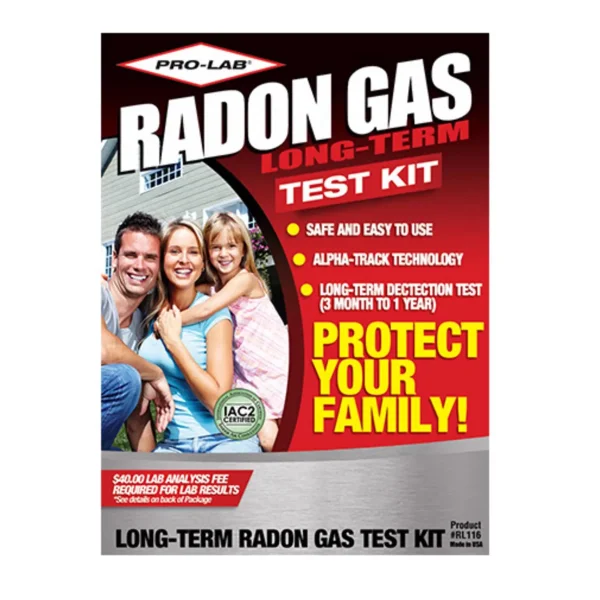
- Pro-Lab Alpha-track: ±25% (90-365 day test)
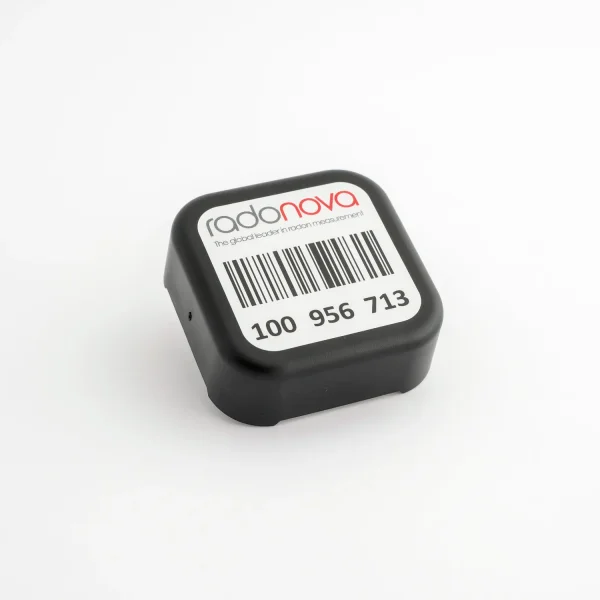
- Radonova Radtrak³: ±6% (90+ day test)
- Airthings Wave Plus: ±10% (7+ day average)
What ±10-15% means:
- True level: 4.0 pCi/L
- Charcoal result: 3.4-4.6 pCi/L typical range
Factors Affecting Accuracy
1. Exposure duration:
- 48 hours: Less accurate
- 72-96 hours: Optimal accuracy (recommended)
-
7 days: Accuracy degrades
2. Closed-house compliance:
- Perfect compliance: Good accuracy
- Windows open even briefly: Results artificially low
- Fans running: Results artificially low
3. Environmental conditions:
- High humidity: Moisture reduces charcoal efficiency
- Very low/high temperature: Affects adsorption rate
- Ideal: 50-80°F, 30-70% humidity
4. Shipping delay:
- Ship within 2-3 days: Good accuracy
- Ship after 4-7 days: Accuracy degrades (radon decay)
- Ship after 7+ days: Results unreliable (too much decay)
5. Seasonal variation:
- Winter test: May read higher (house sealed, heating active)
- Summer test: May read lower (AC, different ventilation)
- Result is snapshot, not annual average
Known Limitation: Snapshot vs Annual Average
Critical understanding:
- Charcoal test = 48-96 hour snapshot
- Does NOT represent annual average
- Radon fluctuates seasonally (2-3× variation winter vs summer)
Example:
- Winter charcoal test: 6.2 pCi/L
- Summer charcoal test (same house): 2.1 pCi/L
- Annual average (long-term test): 3.8 pCi/L
Implication:
- For annual baseline: Use long-term alpha-track (90-365 days)
- For real estate screening: Charcoal is perfect (represents conditions during transaction period)
Real-World Use Cases
Use Case 1: Real Estate Pre-Purchase Inspection
Scenario: Buyer purchasing home, inspection contingency allows 10 days for radon testing.
Protocol:
- Home inspector deploys 2× Pro-Lab charcoal canisters in basement
- Maintains closed-house conditions 72 hours
- Retrieves canisters, mails same day
- Lab results received in 7 days
- Results included in inspection report
Example outcome:
- Canister 1: 5.8 pCi/L
- Canister 2: 6.4 pCi/L
- Average: 6.1 pCi/L (elevated above EPA 4.0 pCi/L)
Why charcoal was ideal:
- Fast turnaround fits inspection timeline
- EPA-compliant method accepted by all parties
- NRPP-certified results legally defensible
- Affordable
Use Case 2: Post-Mitigation Verification
Scenario: Homeowner installed radon mitigation system, wants to verify effectiveness quickly.
Protocol:
- Wait 30 days after mitigation installation
- Deploy 2× Pro-Lab charcoal canisters
- Maintain closed-house conditions 96 hours
- Mail to lab
- Results in 7-10 days
Results:
- Pre-mitigation (long-term test): 7.8 pCi/L
- Post-mitigation (charcoal test): 1.4 pCi/L
- Reduction: 82% (successful mitigation)
Follow-up:
- Homeowner schedules long-term alpha-track test (90+ days) for sustained verification
- Charcoal provided quick confirmation system working
- Long-term test confirms results hold over time
Use Case 3: Initial Home Screening
Scenario: New homeowner wants to know if radon testing needed before investing in long-term test or mitigation.
Protocol:
- Deploy Pro-Lab charcoal during winter (highest radon season)
- 72-hour closed-house test
- Results guide next steps
Outcome A (Low result):
- Result: 1.2 pCi/L
- Decision: No mitigation needed, retest in 2-5 years
Outcome B (Elevated result):
- Result: 8.6 pCi/L
- Decision: Proceed with long-term alpha-track test to confirm annual average
- If long-term confirms elevated: Install mitigation
Why two-stage approach saves money:
- Charcoal screening identifies which homes need further testing
- Only invest in long-term test if screening suggests problem
- Avoids unnecessary expense of long-term testing homes with low radon
Comparison with Other Test Methods
vs Pro-Lab Long-Term Alpha-Track
Charcoal advantages:
- Much faster (48-96 hours vs 90-365 days)
- Lower cost
- Better for real estate transactions
Alpha-track advantages:
- More accurate annual average
- Captures seasonal variations
- Better for mitigation decisions
- EPA-recommended for annual baseline
When to use each:
- Charcoal: Real estate, quick screening, post-mitigation quick check
- Alpha-track: Annual baseline, mitigation decisions, post-mitigation long-term verification
vs Continuous Electronic Monitor
Charcoal advantages:
- Much cheaper
- NRPP-certified lab analysis (professional credibility)
- No batteries, no maintenance
- Perfect for real estate (accepted by all parties)
Continuous monitor advantages:
- Reusable indefinitely
- Real-time readings
- Trend analysis
- No mail-in process
When to use each:
- Charcoal: One-time testing, real estate, professional verification
- Continuous monitor: Ongoing homeowner monitoring, post-mitigation tracking
Important Purchasing Note
Two Versions on Amazon - Choose Carefully
Version 1 (RECOMMENDED): Lab Fee Included
- ASIN: B08VBPGV82
- Lab analysis included in price
- Just add postage and mail
Version 2 (AVOID): Lab Fee NOT Included
- ASIN: B000BD6D20
- Price: Appears cheap
- 3× more expensive than appears
Recommendation: ALWAYS buy version with lab fee included (B08VBPGV82)
Common User Issues (from Reviews)
Issue #1: Late Mail Arrival
Problem: User mails detector on day 4-5 after retrieval, arrives at lab too late (radon has decayed)
Result: Lab cannot analyze or results artificially low
Solution:
- Mail within 2 days max after retrieval
- Use Priority Mail if near postal deadline
- Add tracking for peace of mind
Issue #2: Closed-House Violation
Problem: User opens windows "just for a few hours" during test
Result: Results artificially low (radon diluted by outdoor air)
Solution:
- Maintain strict closed-house conditions
- Plan test during season when closed windows comfortable
- Educate all household members (kids, guests) not to open windows
Issue #3: Incorrect Placement
Problem: User places in bathroom, kitchen, or near window
Result: Unrepresentative measurement
Solution:
- Lowest lived-in level (bedroom, family room)
- 20+ inches from walls
- Away from windows, doors, kitchens, bathrooms
Frequently Asked Questions
Q: Can I use one canister or do I need two?
A: EPA recommends two for verification (averaging). For personal screening, one is acceptable. For real estate, always use two (buyer/seller/inspector expect it).
Q: What if my two results differ significantly?
A: If >20% difference, one may be defective or closed-house conditions violated. Contact Pro-Lab for guidance. They may offer free retest.
Q: How quickly must I mail after retrieval?
A: Within 2-3 days maximum. After 3 days, radon decay reduces accuracy. After 7 days, results unreliable.
Q: Is First Class Mail sufficient or do I need Priority?
A: First Class (2-5 day delivery) is fine if mailing within 2 days of retrieval. Use Priority if cutting it close (day 3-4 after retrieval).
Q: Can I test during summer or must it be winter?
A: Can test any season. For annual baseline, winter gives worst-case (highest) reading. For real estate, test during transaction period regardless of season.
Q: Do I need to pay for return postage?
A: Yes. Return postage NOT included.
Q: What if result is exactly 4.0 pCi/L (EPA action level)?
A: Borderline. Consider:
- Follow up with long-term test
- ±10-15% uncertainty means true level could be 3.4-4.6 pCi/L
- Mitigation typically reduces to <2 pCi/L
- Many mitigate at 4.0 pCi/L for peace of mind
Q: Can I reuse the canister for second test?
A: No. Charcoal canisters are single-use. Once exposed and analyzed, cannot be reset or reused.
Sources & References
This analysis is based on verified information from:
Manufacturer specifications:
Product availability and reviews:
Independent testing and reviews:
- Radon Guide Pro-Lab Review
- Home Hazards Report - Best Radon Test Kits 2026
- Radon Resources Testing Roundup 2026
Final Verdict
Overall Rating: 4.2/5
Strengths:
- Fastest passive test (48-96 hours)
- Most affordable
- EPA-recommended for real estate
- NRPP-certified laboratory
- NSF/ANSI Standard 269 certified
- Widely available
- Proven technology (charcoal adsorption standard for decades)
Weaknesses:
- Snapshot only (not annual average)
- Less accurate than long-term tests (±10-15% vs ±6%)
- Time-sensitive shipping requirement
- Requires strict closed-house conditions
- Weather-dependent accuracy
Bottom Line
The Pro-Lab Charcoal Radon Test Kit is the best choice for fast, affordable radon screening, particularly for real estate transactions where speed and EPA compliance are critical.
Use charcoal test for:
- Real estate pre-purchase inspections
- Initial home screening
- Quick post-mitigation verification
- Professional home inspections
- When budget is primary concern
- When results needed in 7-14 days
Use long-term test instead for:
- Annual baseline measurement
- Mitigation decisions (want annual average, not snapshot)
- Post-mitigation long-term verification
- Capturing seasonal variations
Use continuous monitor for:
- Ongoing homeowner monitoring
- Real-time feedback
- Trend analysis
- Reusable long-term investment
Recommendation: Every homeowner should do at least one charcoal test for initial screening.
Last updated: October 29, 2026 Author: Radon Hub Editorial Team Data sources: Pro-Lab official specifications, EPA testing protocols, NRPP certification standards, NSF/ANSI Standard 269, Home Depot/Amazon verified reviews, independent testing by radon professionals
Related Products:
- Pro-Lab Long-Term Kit - Annual baseline (90-365 days)
- Radonova Radtrak³ - Premium long-term with ISO 17025
- Airthings Corentium Home - Continuous monitor alternative