Continuous Radon Monitors Comparison
Detailed analysis of 4 real-time measurement devices for homes and professional spaces
What are Continuous Radon Monitors
Continuous radon monitors are electronic devices that measure radon levels in real-time, providing updated readings every hour. Unlike passive detectors that require lab shipping and weeks of waiting, these monitors offer immediate results viewable on a display or mobile app. They are ideal for ongoing home monitoring, post-mitigation verification, and education about radon variations. While they provide valuable data for decision-making, they should be complemented with NRPP-certified passive lab tests for real estate transactions and official compliance with EPA protocols in the United States.
Regulatory Context (US/International)
EPA Action Level
148 Bq/m³ (4 pCi/L)US Environmental Protection Agency
Recommended action level for homes. EPA advises mitigation if radon exceeds this threshold based on year-long average.
WHO Recommendation
100 Bq/m³ (2.7 pCi/L)World Health Organization
Lower reference level recommended to reduce lung cancer risk. If not achievable, maximum 300 Bq/m³.
ANSI/AARST Protocols
Varies by test typeAmerican Association of Radon Scientists and Technologists
Professional measurement standards for real estate, including device placement, conditions, and minimum test duration requirements.
Regulatory Compliance
Accepted for screening and personal monitoring. NOT valid for real estate transactions. Use NRPP-certified passive tests for home sales and official compliance.
NRPP-certified lab analysis required for real estate transactions, home inspections, and legal compliance with EPA and state regulations.
When to Choose Continuous Monitors
Continuous Home Monitoring
Ideal for homeowners who want real-time data on radon levels and daily, weekly, or monthly trends without waiting for lab results.
Post-Mitigation Verification
Perfect for confirming a mitigation system works correctly, with immediate readings before and after installation.
Smart Home Integration
Excellent for users with home automation ecosystems who want to integrate radon measurements with other environmental sensors and automations.
Education and Awareness
Useful for understanding how radon levels vary with ventilation, weather, and seasons, helping make informed mitigation decisions.
Side-by-Side Comparison
| Feature | ||||
|---|---|---|---|---|
| Detection Method | pulsed ion | alpha spectrometry | pulsed ion | pulsed ion |
| Type | continuous | continuous | continuous | continuous |
| Measurement Range | 0-500 pCi/L | 0-500 pCi/L | 0.2-99.9 pCi/L | 0-500 pCi/L |
| Accuracy | ±10% at 100 Bq/m³ (2.7 pCi/L) after 7 days | Within ±10% after 7 days at 10 pCi/L, ±5% after 2 months | <±10% at 10 pCi/L (minimum error <±0.5 pCi/L) | ±10% after 7 days at 148 Bq/m³ (4 pCi/L), ±5% after 2 months |
| Response / Exposure Time | 30-48 hours for stable reading | 6-24 hours for initial reading, 7 days for ±10% accuracy | <60 minutes for first reliable data | 7 days for ±10% accuracy, 2 months for ±5% accuracy |
| Power Source | Battery 16 months battery life | Battery 24 months battery life | AC/DC 0 months battery life | Hybrid 24 months battery life |
| Connectivity | Bluetooth | None | Bluetooth | WiFi Bluetooth |
| Display | None | LCD | OLED | E-ink |
| App Support | iOS Android Airthings | N/A | iOS Android RadonEye+ | iOS Android Airthings |
| Certifications | EPA CE FCC +1 | EPA CE FCC | CE FCC NRSB | EPA CE FCC +1 |
| Overall Rating | 4.7/5 Accuracy:4/5 Ease of Use:5/5 Value:4/5 | 4.8/5 Accuracy:4/5 Ease of Use:5/5 Value:5/5 | 4.3/5 Accuracy:4/5 Ease of Use:5/5 Value:5/5 | 4.3/5 Accuracy:5/5 Ease of Use:4/5 Value:3/5 |
| Best For |
|
|
|
|
Key Decision Factors
When comparing continuous radon monitors, these are the most important aspects to consider based on their impact on utility, accuracy, and user experience.
Measurement Accuracy
Typical range ±10-20% compared to certified labs. Critical for mitigation decisions. Check for EPA approval or independent certification.
Connectivity Type
WiFi enables remote access and automatic updates. Bluetooth requires proximity but uses less battery. Standalone without connectivity is simpler but limits features.
Built-in Display
Physical display allows quick readings without smartphone. Useful for elderly or quick visual verification. App-only models require phone constantly.
Battery Life
AA batteries last 1-2 years typically. Rechargeable requires periodic maintenance. AC power eliminates concern but needs nearby outlet.
Additional Sensors
Temperature, humidity, CO₂, VOCs, and atmospheric pressure help correlate radon levels with environmental conditions. Not critical but adds value.
App Quality
Data export, configurable alerts, historical charts, and smart home integration improve experience. Test app beforehand if decisive for you.
Recommendations by Use Case
Best for Smart Home
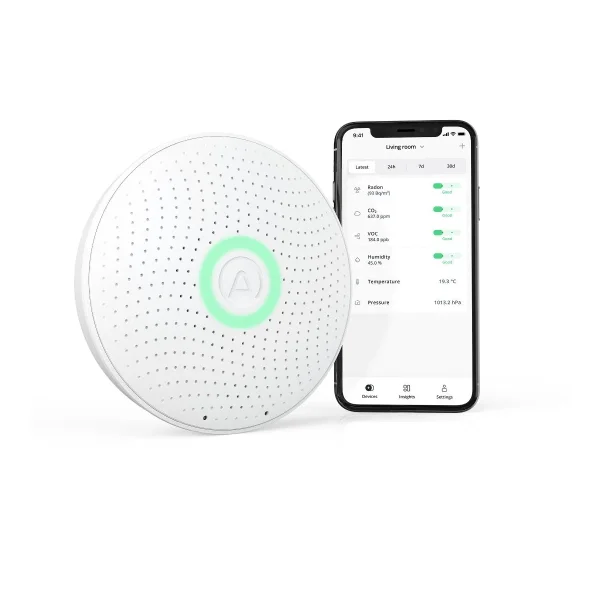
Airthings Wave Plus offers the best integration with home automation ecosystems (Google Assistant, Alexa, IFTTT), multiple sensors (radon, CO₂, VOCs, humidity, temperature, pressure), and WiFi for remote access.
Best Display and Sensors
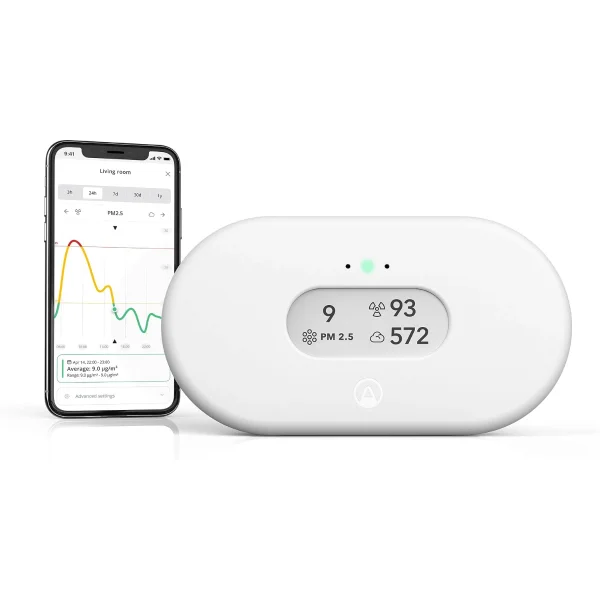
Airthings View Plus stands out with its 6" color display showing all parameters simultaneously without needing a smartphone. Includes the most comprehensive 6-sensor suite on the market.
Best Standalone without App
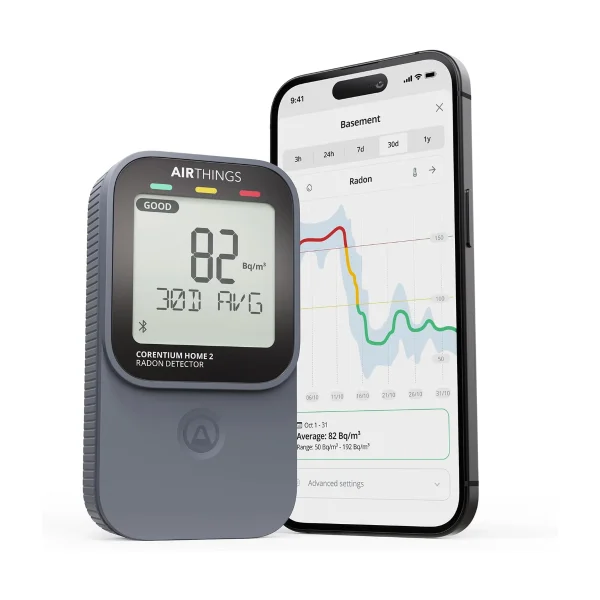
Corentium Home is perfect if you prefer simplicity without apps or WiFi. Integrated LED display, long-lasting AA battery, and completely autonomous operation. Most economical option too.
Best Value for Money
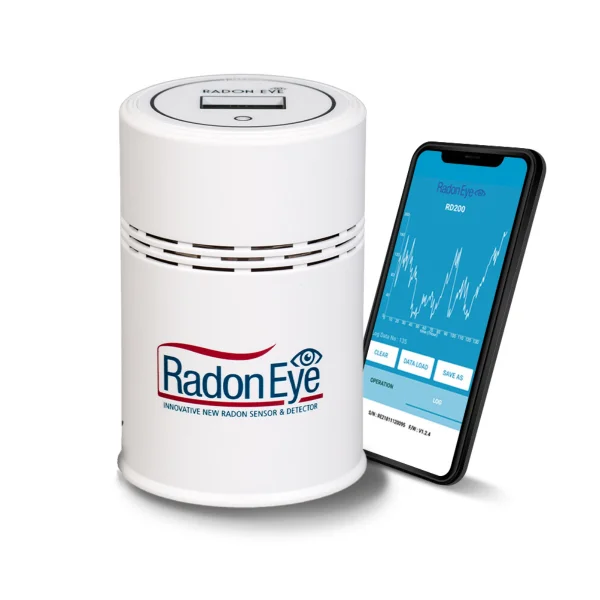
RadonEye RD200 offers excellent accuracy with Bluetooth connectivity, well-designed app, and mid-range pricing. Ideal balance between modern features and reasonable cost.
Frequently Asked Questions
Are continuous monitors as accurate as passive lab tests?
Continuous monitors have typical accuracy of ±10-20% compared to ISO 17025 certified labs. They are accurate enough for screening and personal decisions, but NRPP-certified passive lab tests are required for real estate transactions and official compliance in the US.
Are continuous monitors accepted for home sales?
No. Real estate transactions in most US states require NRPP-certified passive detectors analyzed by approved labs following ANSI/AARST protocols. Continuous monitors are valid for screening and personal monitoring only, not for legal compliance in home sales.
Do they need periodic calibration?
Most modern continuous monitors do not require user calibration. Manufacturers calibrate at the factory and the sensor maintains accuracy during its lifespan (typically 5-10 years). Check manufacturer specifications for sensor lifetime.
How long should I wait before trusting the readings?
For initial indicative readings, 24 hours is sufficient. For greater accuracy, wait 7 days. For reliable trends and comparison with action levels, monitor for 30-90 days to capture seasonal variations and occupancy patterns.
Do they work in basements without WiFi?
Standalone models like Corentium Home work perfectly without WiFi. WiFi models like Wave Plus and View Plus require signal for cloud sync, but you can use mobile hotspot temporarily for initial setup. Bluetooth model like RadonEye works without WiFi.
Can I use multiple monitors to improve accuracy?
Yes, placing 2-3 monitors in the same room and averaging readings improves statistical accuracy. Useful for critical mitigation decisions. However, for official compliance always use NRPP-certified passive lab tests.